 +1 2149 811 707

Blog
Andúril Sword: The Complete Lore and US Collector’s Guide

In one of the most unforgettable moments of The Lord of the Rings: The Return of the King, Aragorn stands on the Paths of the Dead before the cursed Army of the Dead, not with words or threats, but holding a single object, Andúril, the reforged blade of Narsil that once struck down Sauron in the War of the Last Alliance. The Dead recognize it instantly, not because of magic, but because it carries the weight of history: the memory of fallen kings, lost kingdoms like Númenor, the shattering of Narsil, and the long struggle to restore what was lost after the Downfall of Númenor.
Andúril is more than Aragorn’s sword; it is a living record of Middle-earth’s greatest triumphs and tragedies, the symbol of the reunited thrones of Gondor and Arnor, and a testament to the endurance of history itself. This guide traces Andúril’s full story, decodes its Elvish inscription, and offers American collectors a practical roadmap to owning a replica worthy of the legend.
Andúril Explained: The Sword, the Story, and Why It Still Matters:
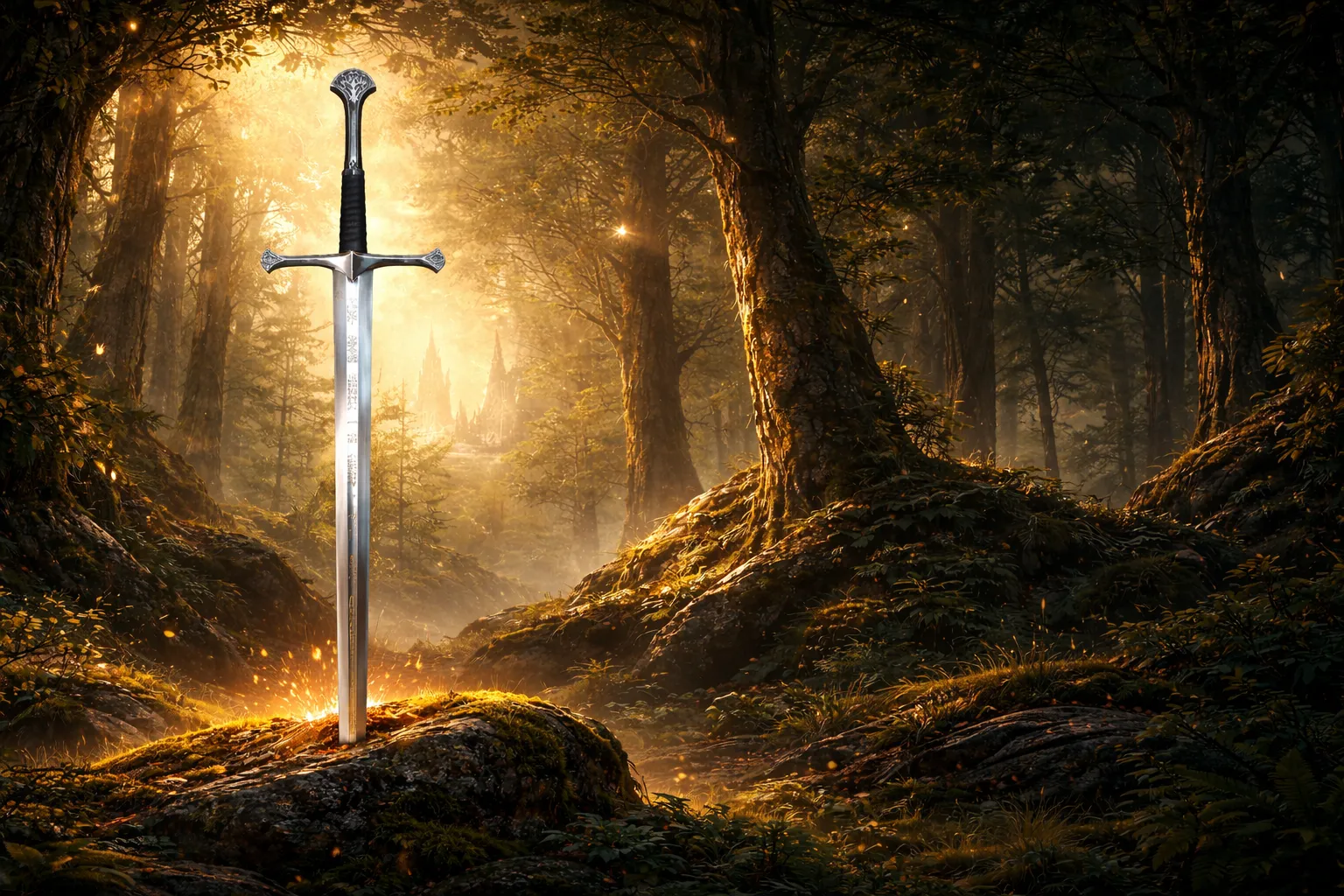
Andúril is the reforged version of Narsil, the legendary sword of Elendil, broken during the final battle against Sauron in the Second Age and remade by Elven smiths in Rivendell for Aragorn, the last heir of that royal line. Carrying Andúril is far more than having a sharp blade: it is Aragorn’s declaration of legitimacy, a visible proof that he is the rightful king of Gondor and Arnor, commanding respect and allegiance from allies and enemies alike. Beyond its political and practical role, Andúril is arguably the most symbolically charged sword in Tolkien’s work, representing the restoration of lost kingdoms, the continuity of heroic bloodlines, and the enduring struggle between light and darkness across Middle-earth, making it a touchstone for both the story and its deeper mythic resonance.
From Narsil to Andúril: A Sword Six Thousand Years in the Making
From the First Age forging by Telchar of Nogrod, Narsil was shattered at Mount Doom, preserved for millennia, and was reforged in Rivendell as Andúril, the Flame of the West, for Aragorn.
The Birth of Narsil: Forged by Telchar of Nogrod:
In the fires of the First Age, Narsil was born under the hammer of Telchar of Nogrod, whose skill made him the greatest smith the Dwarves ever produced.
Narsil in the Second Age: Elendil’s Sword in War:
The blade gleamed with promise long before the age of Men, and in the Second Age it found its place in the hands of Elendil, who bore it into the final, desperate battles of the War of the Last Alliance against Sauron.
The Shattering and the Last Act of the Second Age:
At the foot of Mount Doom, Elendil fell, and Narsil shattered into shards, but even broken, the sword was not done. Isildur grasped a fragment and with it struck the final blow, cutting the One Ring from Sauron’s hand, ending the Second Age in fire and shadow.
The Long Silence: Shards Preserved in Rivendell:
For over three thousand years, the shards rested quietly in Rivendell, tended by Elves and passed through generations of Dúnedain who bore them but could not yet claim their destiny.
Reforged as Andúril: The Flame of the West
Then, in the fullness of time, the shards were reforged. The Elven smiths of Rivendell breathed life into steel once more, melding the pieces into a single blade and naming it Andúril, Flame of the West, a weapon meant not only to cut but to proclaim the return of the king, a living thread that tied the hero of the Third Age back to the kings and heroes of ages long past.
The Writing on the Blade: Breaking Down Andúril’s Elvish Inscription
Fans seeing an Andúril replica often ask: what does that writing say? Along the blade is a Quenya inscription in Tengwar: “Narsil essenya, macil meletya; Telchar carnéron Návarotessë,” which means, “Narsil is my name, a mighty sword; Telchar made me in Nogrod.” The hilt and pommel add symbols: seven stars for the House of Elendil, a crescent moon, and a rayed sun, representing Aragorn’s claim over Arnor and Gondor. Together, the blade and its markings act as a historical puzzle, allowing fans to decode its legacy and authority across Middle-earth.
Three Moments in the War of the Ring Where Andúril Made All the Difference:
The first moment comes when Aragorn presents Andúril to the scattered Dúnedain Rangers, its gleaming steel proving his identity and rallying the Grey Company around their king. Suddenly, the lost heirs of Númenor recognize their leader and follow. The second moment unfolds in the Paths of the Dead, where Andúril is raised not as a weapon but as a credential, compelling the Army of the Dead to honor their ancient oath.
The final moment strikes at the Black Gate, as Aragorn draws Andúril as King Elessar, completing the 3,000-year arc of a broken blade now reforged. In each case, Andúril doesn’t win battles by sharpness; it wins through what it represents, making it the ultimate collector’s sword.
Andúril vs. the Rest: How It Stacks Up Against Middle-earth’s Most Famous Blades
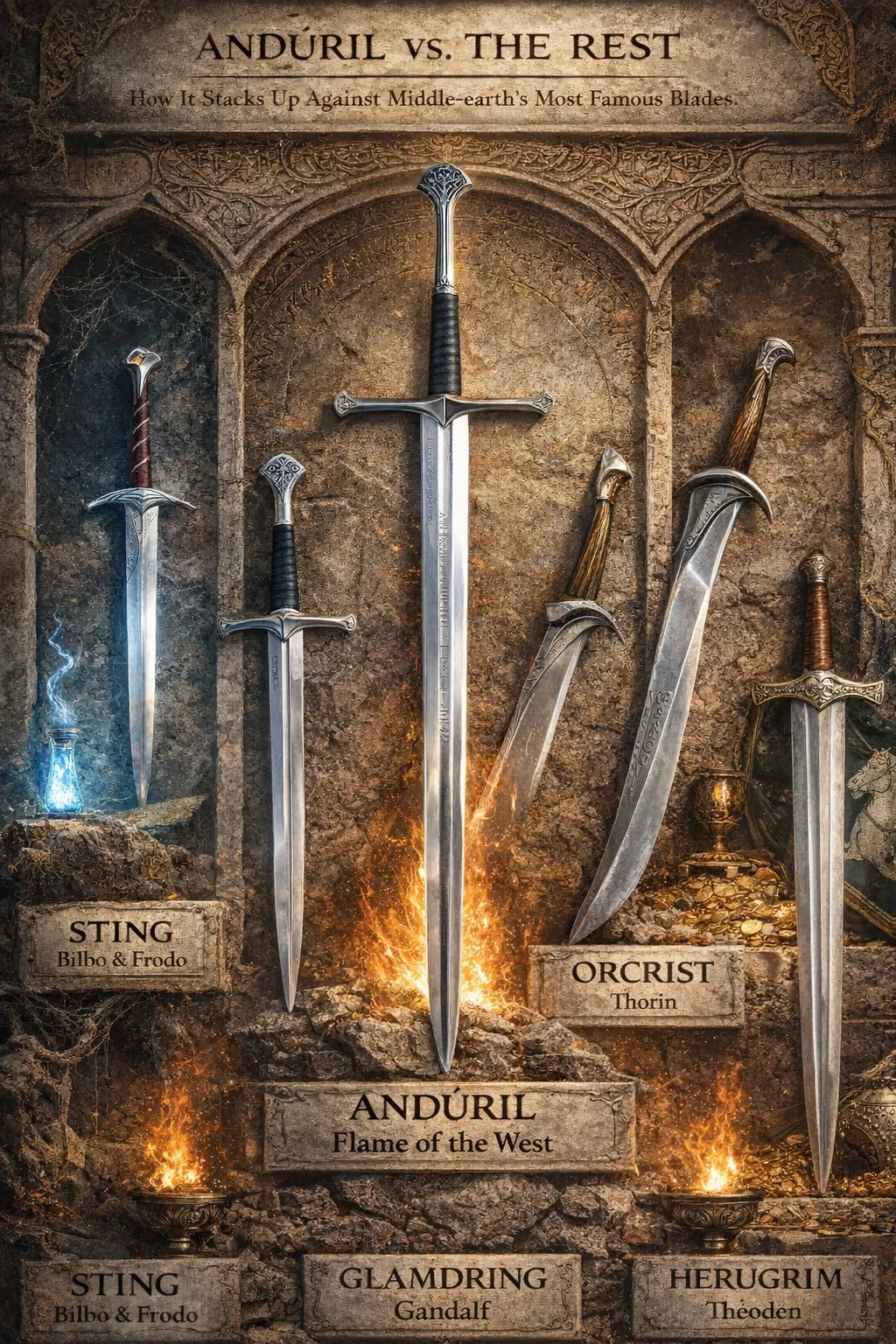
For American collectors, comparing Andúril to other iconic LOTR swords helps decide which to acquire. Glamdring, Gandalf’s Elven blade recovered from Goblin-town, is visually striking and steeped in Elven history, but mainly tied to a single character. Sting, Bilbo and Frodo’s short Elvish sword that glows against Orcs, is perfect for Hobbit-scale adventures yet limited in historical significance. Orcrist, Thorin’s Goblin-cleaver, is elegant and dramatic but narratively shorter in scope. Herugrim, Théoden’s sword of Rohan, embodies courage and leadership but is tied to one kingdom. Andúril Flame of the West merges millennia of history, distinctive design, inscriptions, and cinematic presence, making it the richest and most compelling centerpiece for any collection.
Five Things That Separate a Quality Andúril Replica from a Cheap Imitation:
When buying an Andúril replica, not all swords are created equal. Understanding the key quality markers helps collectors avoid cheap imitations and invest in a piece worthy of display.
Blade Steel:
A quality Andúril replica uses high-carbon steel, which holds detail well and withstands humidity changes common in American homes. Lower-end versions often use 420 stainless steel, which resists rust but is softer, lighter, and less historically faithful. High-carbon blades cost more, typically reflecting the craftsmanship and durability collectors expect, while stainless options are cheaper but feel and display differently.
Tang Construction:
Look for a full-tang construction, where the steel runs the full length of the handle, providing stability even if the sword is never swung. Cheaper replicas often use a rat-tail tang, which is hollow and prone to loosening or bending over time, visible in uneven grips or slight wobble.
Hilt Accuracy:
A faithful Andúril replica matches the winged crossguard, pommel shape, and grip wrap seen in the films. Imitations often simplify these details, using flat or oversized guards, generic pommels, or cheap leather substitutes that sacrifice the cinematic silhouette.
Inscription Quality:
The Elvish runes should be etched or engraved into the steel, not printed or applied as stickers. In photos, etched runes catch light naturally and have depth; printed or sticker designs often appear flat, misaligned, or prone to peeling over time.
Licensing:
A true Warner Bros. Consumer Products license ensures the replica is officially sanctioned. The certificate of authenticity confirms that both the design and inscription meet studio standards, protecting collectors from unlicensed knockoffs that may compromise accuracy or quality.
Bringing Andúril Home: Display Options, Care, and What US Collectors Should Know:
Display Options:
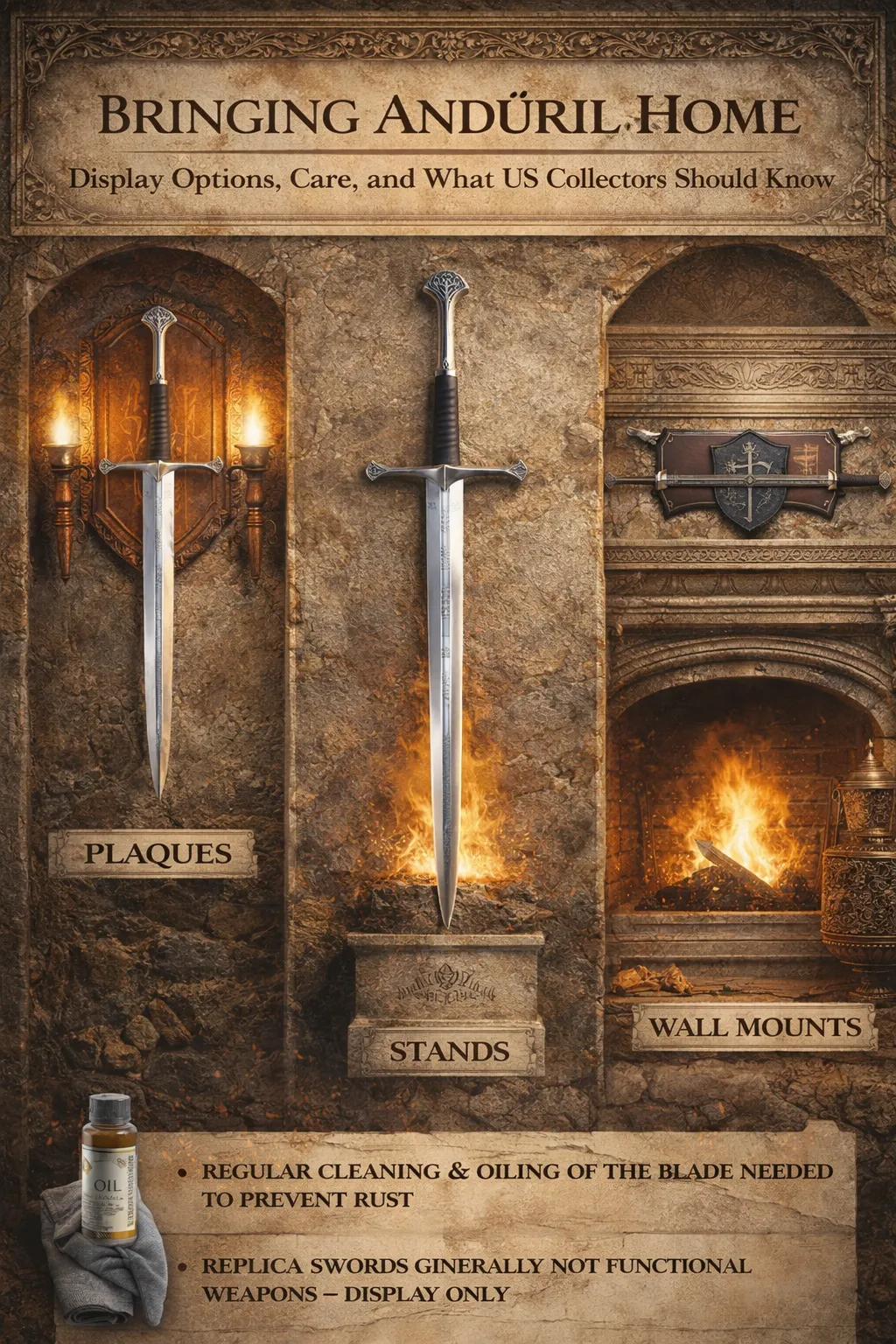
- Wall Plaques – The most popular choice for American homes, ideal for living rooms, home offices, or game rooms. A mounted display highlights the full profile of Andúril while saving space.
- Floor Stands – Best for larger rooms or dedicated collection spaces, allowing the full length of the sword to be visible and easily admired.
- Framed Glass Cases – The safest option for high-value replicas, protecting the blade from dust, humidity changes, and accidental contact in busy households.
Care:
- Stainless Steel Blades – Wipe occasionally with a soft cloth and apply a light coat of oil to maintain shine.
- High-Carbon Steel Blades – Apply a thin layer of mineral oil every few months to prevent corrosion, especially in humid areas.
- Grip and Hilt Maintenance – Keep the handle dry and dust-free to preserve leather wrapping and metal fittings over time.
What US Collectors Should Know:
- Regional Climate Care – Collectors in humid regions like the South or Pacific Northwest should watch for moisture exposure, while those in dry areas like the Southwest should occasionally condition leather grips.
- Heating and Storage – In colder regions such as the Northeast and Midwest, keep swords away from heating vents to prevent drying out of grip materials.
- Legal Ownership – Decorative replicas of Andúril are legal to own and display in homes across the United States, and no federal permit is required for private display.
Where to Buy an Andúril Replica Sword:
Collectors looking for a replica of Andúril can choose from several versions depending on their display style and budget. Some replicas recreate the fully reforged sword carried by Aragorn, while others reproduce the broken shards of Narsil seen earlier in the story. You can find different styles, finishes, and display options through Swordskingdom, where collectors can choose between complete swords, decorative replicas, or broken-blade versions to suit their collection and personal preference.
CONCLUSION:
The story of Andúril is the story of time itself in Middle-earth, a blade once shattered as Narsil, preserved for three thousand years, and reforged precisely when its rightful bearer, Aragorn, needed it most. Its inscription still speaks in Quenya, naming its maker and its legacy across six millennia of legend. For collectors, owning an Andúril replica means holding a piece of that story. Choosing the right one simply ensures the sword on your wall reflects the history, craftsmanship, and meaning that made the Flame of the West legendary.