 +1 2149 811 707

Blog
Rambo’s Knife: How First Blood Changed Survival Knives Forever

In the movie First Blood, Rambo used a big, strong survival knife that became famous. Before this, most knives were simple and only for hunting or cutting. Rambo’s knife was special, it could do many things, like cutting, fighting, and carrying small tools in its handle. People loved its strong, sharp blade and practical design.
After the movie, many knife makers started creating knives like Rambo’s for outdoor survival and adventures. Today, Rambo’s knife is more than a movie tool it changed the way people think about survival knives, making them stronger, smarter, and more useful.
Survival Knives in Cinema Before Rambo:
Before Rambo, knives in movies were mostly simple tools or weapons. From the 1960s to the early 1980s, action films, war movies, and westerns showed knives mainly for fighting or basic tasks like cutting rope or food. They were not designed as all-in-one survival tools. Films like The Dirty Dozen and classic westerns often featured knives, but these blades did not leave a lasting cultural impact.
Knives were props, not stars. The idea of a knife built for survival and adventure, strong, multi-functional, and stylishhad not yet appeared on screen, leaving room for Rambo’s iconic influence.
The Limited Role of Knives in 1960s–70s Action Films:
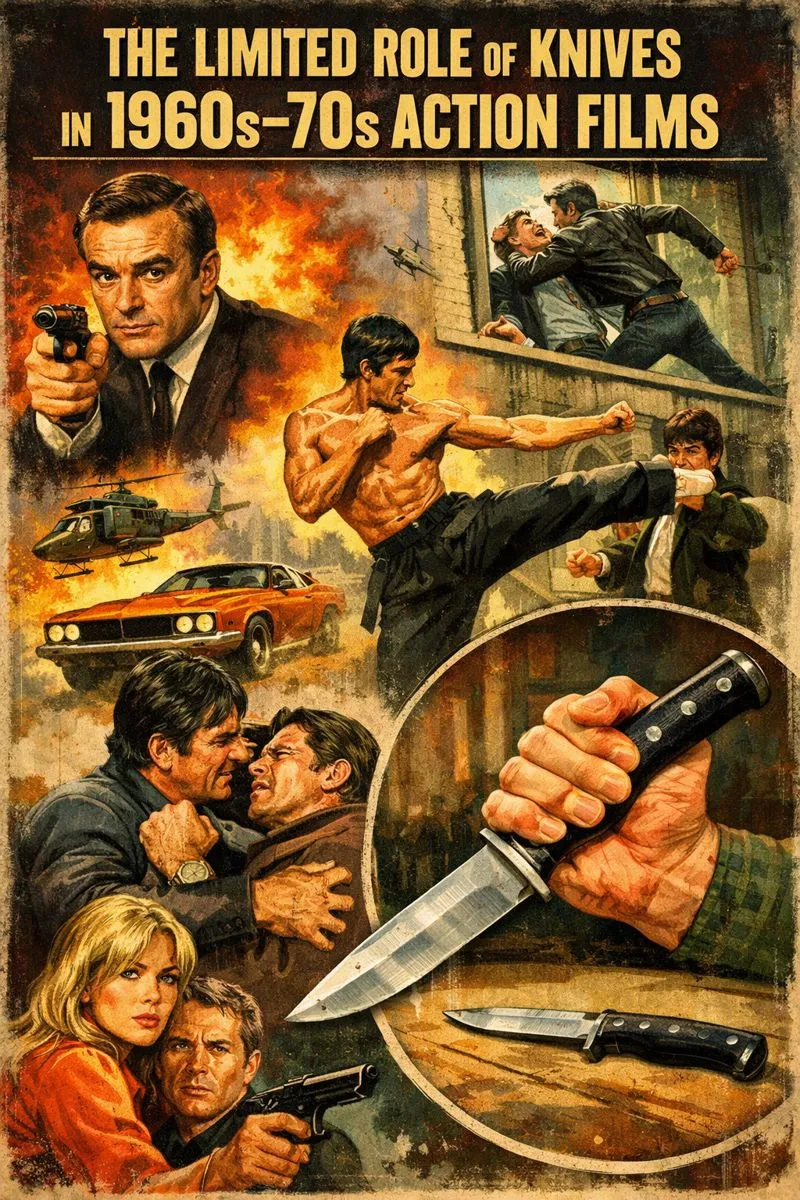
In action films from the 1960s and 1970s, knives played a small role. Movies focused more on guns, explosions, and hand-to-hand fighting. Knives were usually shown only when no other weapon was available, often as a last-resort tool rather than a main feature.
Bowie Knives and Military Surplus: The Standard Before Innovation:
Before new designs appeared, most movie knives were simple Bowie knives or military surplus blades. These knives were strong but basic, made mainly for fighting or general use. They lacked special survival features like storage handles or multi-purpose tools, limiting their role to traditional knife functions.
Jimmy Lile: The Knifemaker Who Changed Everything:
Jimmy Lile was a skilled knifemaker from Arkansas known for making strong, reliable knives. When Sylvester Stallone needed a knife for First Blood, he chose Lile because he wanted something real, not just a movie prop. Lile believed a knife should be useful, tough, and built for survival. He designed the Rambo knife as a true survival tool, with a sharp blade, strong build, and space to hold small survival items. Stallone asked for a knife that looked powerful and worked in real life. Lile’s careful design and attention to function helped create one of the most famous knives in movie history.
1. From Coal Miner’s Son to Master Craftsman:
Jimmy Lile was born in Arkansas and grew up as the son of a coal miner. He made his first knife at just 11 years old. His passion grew over time, and in 1971, he became a full-time knifemaker, known for skill, precision, and hard work.
2. Lile’s Design Philosophy: Function Over Flash
Jimmy Lile believed a knife should work perfectly, not just look good. He focused on strength, balance, and real-world use. This practical mindset made him ideal for the Rambo knife, which needed to be tough, useful, and reliable, not just a flashy movie prop.
The First Blood Knife: A Revolutionary Design:
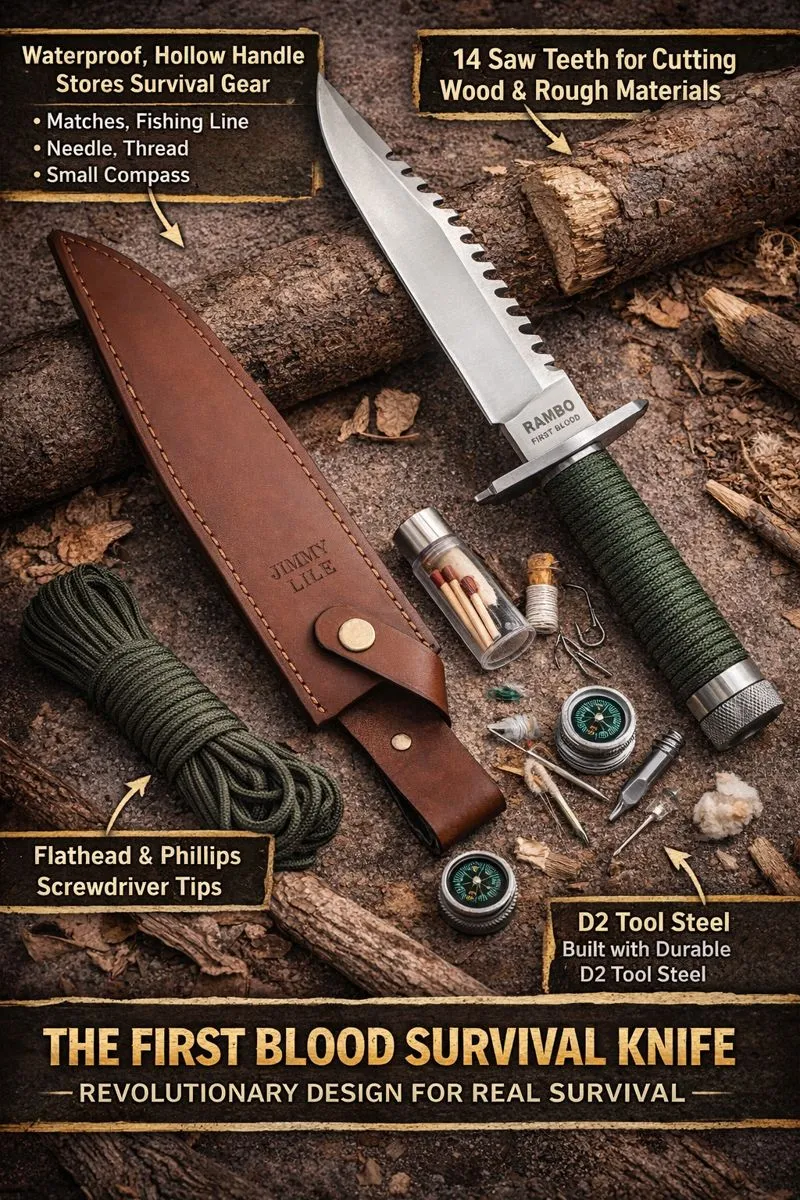
The First Blood knife was not just made to look good on screen. Jimmy Lile designed it as a real survival tool. Every part of the knife had a clear purpose, combining many survival functions into one strong and reliable blade. This approach was new and changed the knife design forever.
1. The Hollow Handle Innovation: More Than Just Storage
The knife featured a waterproof hollow handle, which was groundbreaking at the time. Inside, Rambo carried matches, fishing line, needles, thread, and a small compass. This allowed the knife to act as a survival kit, inspiring future survival knives to include storage features.
2. Saw Teeth and Screwdrivers: Every Feature Had a Purpose
The spine of the blade had 14 saw teeth used for cutting wood and rough materials. The guard included screwdriver tips, useful for small repairs. These features made the knife useful in many survival situations, not just combat.
3. Materials and Construction: Built for Real Survival
Lile used strong D2 tool steel to ensure durability. The handle was wrapped with 36 feet of paracord, which could be used for shelter or climbing. Unlike many movie props, this knife was built to survive real-world conditions.
How First Blood Changed Action Cinema Forever:
When First Blood was released in 1982, it became a huge box office success and a cultural phenomenon. Rambo’s knife quickly became as iconic as the character himself. The film changed action movies by focusing on survival, self-reliance, and wilderness skills, not just guns and explosions. After the movie, survival knives became popular household items. Public interest grew fast, and knife makers responded by producing tough, multi-purpose survival knives inspired by Rambo’s blade.
The Rambo Knife Series Evolution Through Five Films
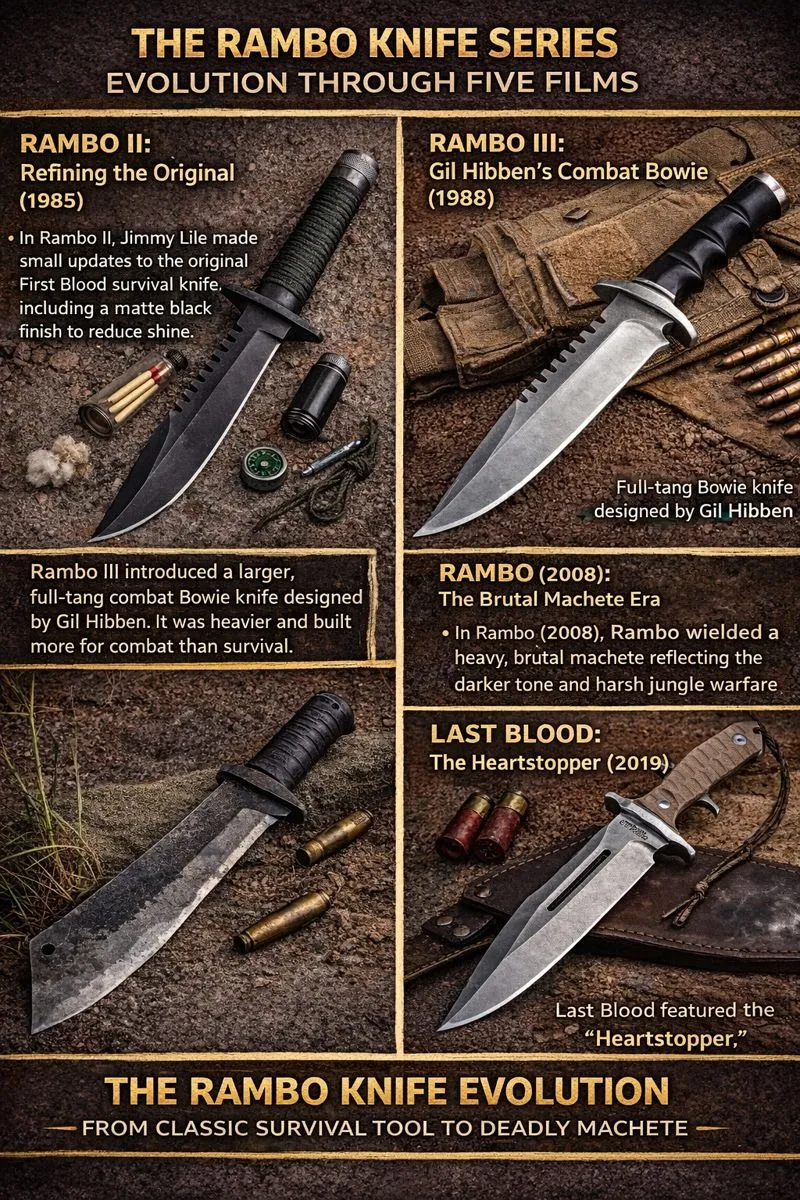
Across five Rambo films, the knife evolved with the character and story. Rambo II kept the original survival design with small updates. Rambo III shifted to a large combat Bowie. Rambo (2008) introduced a brutal machete style. Last Blood ended with the Heartstopper, reflecting a more personal, grounded approach.
1. Rambo II: Refining the Original (1985):
In Rambo II, the knife stayed close to the original First Blood design. Jimmy Lile made only small changes, including a matte black finish to reduce shine. The hollow handle, saw teeth, and survival features remained, showing continuity and reinforcing the knife as Rambo’s trusted survival tool.
2. Rambo III: Gil Hibben’s Combat Bowie (1988):
Rambo III marked a major change with a knife designed by Gil Hibben. The hollow handle was removed and replaced with a full-tang Bowie knife. It was larger, heavier, and built more for combat than survival, matching the film’s war-focused setting and intense action.
3. Rambo (2008): The Brutal Machete Era:
In Rambo (2008), the knife became a cleaver-style machete. This heavy, aggressive design reflected the darker tone of the film and jungle warfare environment. The blade focused on raw power and close combat, showing an older, more hardened version of the character.
4. Last Blood: The Heartstopper (2019):
Last Blood featured the Heartstopper knife, designed by Dietmar Pohl. This 15-inch hunting knife was sharp, simple, and deadly. It symbolised Rambo’s final evolution, less about survival gear and more about precision, experience, and personal combat in a grounded, realistic setting.
Rambo’s Ripple Effect: Other Action Films That Followed
Examine how other 1980s and 1990s action films incorporated survival knives influenced by Rambo’s success. Cover films like Commando, Predator, The Hunted, and others. Discuss how each tried to create their own iconic blade.
1. Commando and the Jack Crain LS1: Following Rambo’s Template
After Rambo, many action films copied the survival knife idea. In Commando (1985), Arnold Schwarzenegger used the Jack Crain LS1 knife. It featured a hollow handle and rugged design, clearly inspired by Rambo’s blade, showing how First Blood set a new standard for action-movie knives.
2. The Tracker Knife in The Hunted: Modern Survival Design
In The Hunted (2003), Tom Brown designed the Tracker knife, showing how survival knives had evolved. Instead of storage features, it focused on chopping, skinning, and carving. This design proved survival knives could be practical tools shaped by real wilderness needs, not just movie style.
The Real-World Impact: How Rambo Changed the Knife Industry
After First Blood premiered in 1982, survival knives became hugely popular. Knife makers quickly began producing Rambo-style blades with hollow handles, saw teeth, and multi-purpose tools. Features like strong steel, paracord-wrapped handles, and survival functionality became industry standards. The market shifted from simple utility knives to tactical-survival designs, blending practicality with rugged style. Outdoor enthusiasts, military personnel, and collectors all embraced these knives, showing how a movie prop transformed both consumer demand and knife-making innovation worldwide.
The Collector’s Market: Original Rambo Knives and Their Value
Original Jimmy Lile First Blood knives are highly prized by collectors. Only 100 were made, each numbered, making them rare and valuable. Auction prices often reach tens of thousands of dollars. Replicas and authorized reproductions exist, but the originals remain the most sought-after due to their authenticity and movie history.
Modern Survival Knives: Rambo’s DNA in Today’s Designs:
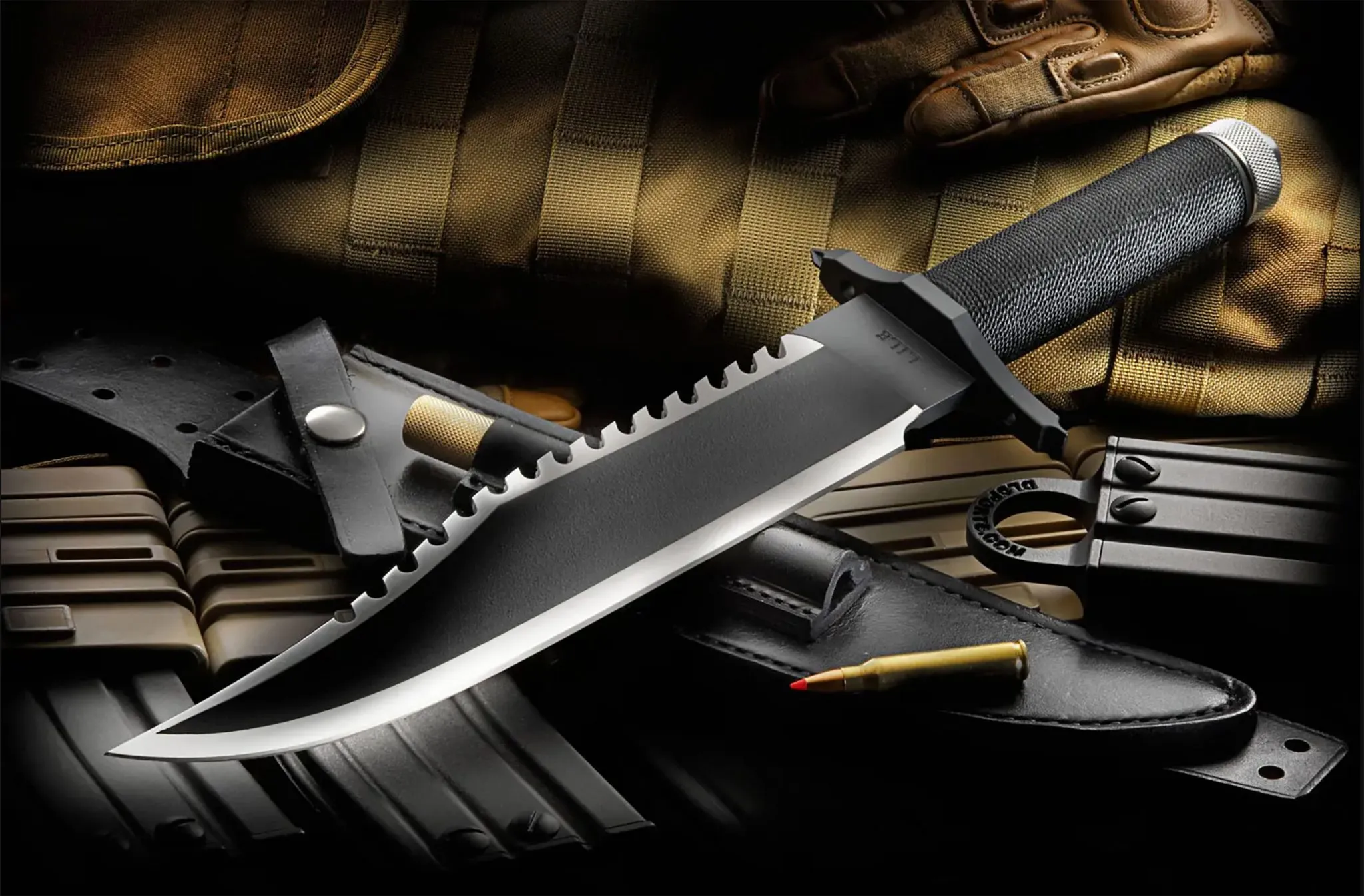
The First Blood knife set the blueprint for modern survival knives. Today, many tactical and survival blades still use hollow handles, strong steel, saw teeth, and multi-purpose designs pioneered by Jimmy Lile. Brands like Ka-Bar, Gerber, and Ontario continue this legacy, offering knives built for adventure, survival, and durability, proving Rambo’s influence remains strong decades later.
Final Thoughts:
Rambo’s knife changed survival knives forever. Before First Blood, knives were simple tools or weapons. Jimmy Lile designed a strong, practical blade with features like a hollow handle, saw teeth, and paracord, making it a true survival tool. The movie inspired knife makers, collectors, and action film fans, creating a lasting impact. Survival knives became functional, versatile, and popular for outdoor adventures. Today, modern tactical and survival knives still carry Rambo’s influence, proving that Lile’s design was more than a movie prop it became a real-world standard and a cultural icon.