 +1-214-981-1707

Blog
Top 10 Most Iconic Video Game Swords of All Time, Ranked

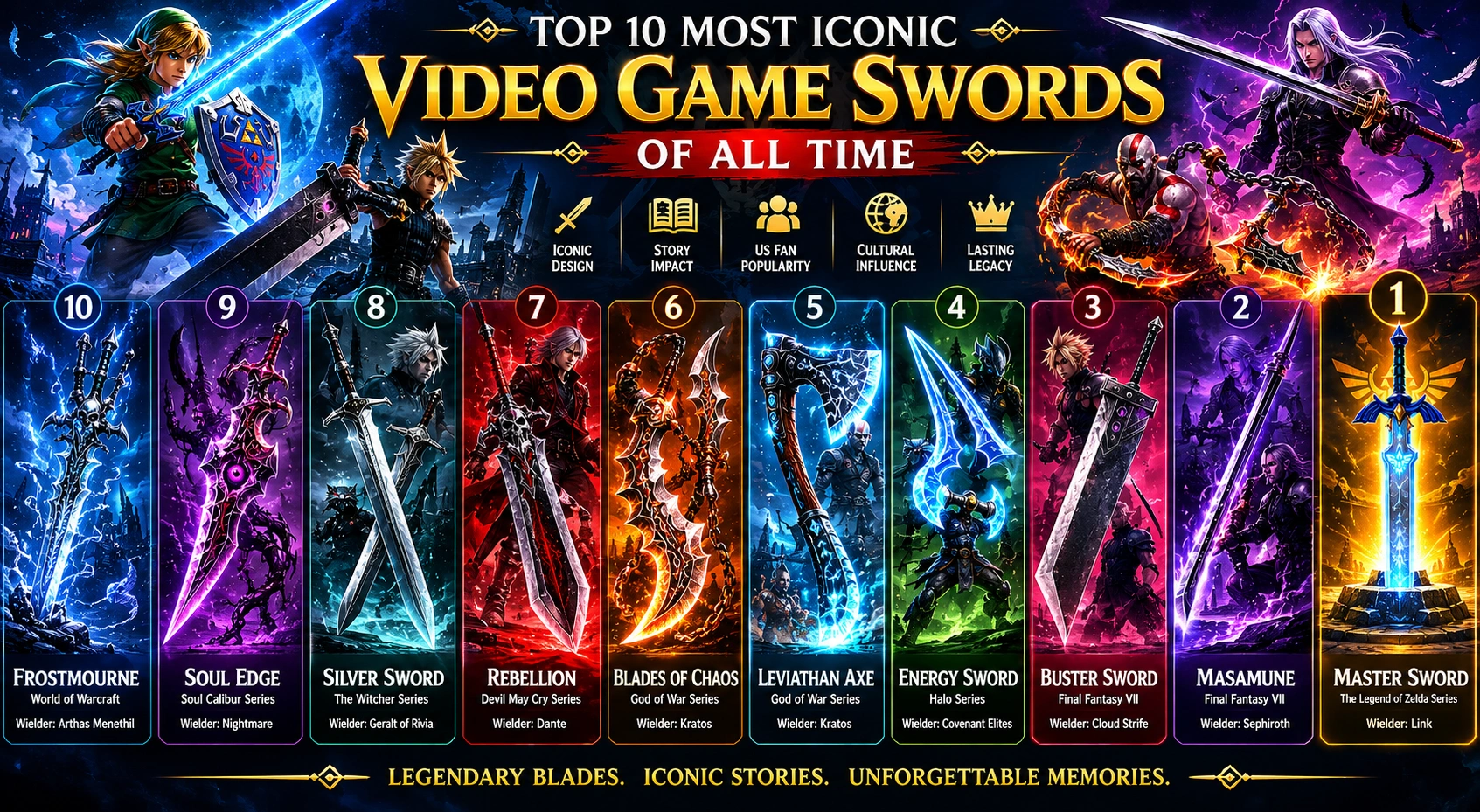
Video game swords have become famous symbols in gaming culture, especially in the United States, where millions of players love fantasy and action games. Unlike guns or regular weapons, swords often carry emotional meaning, powerful stories, and unique designs that fans remember for years. Many iconic swords are closely connected to legendary heroes, unforgettable battles, and popular gaming franchises. What makes a sword truly iconic is not only its power but also its design, its role in a story, its cultural impact, and its fan recognition. American gamers connect deeply with sword-based games because they combine action, adventure, and personal storytelling. This ranking is based on several factors, including popularity, visual style, influence on gaming culture, story significance, and how memorable each sword remains among gamers across different generations.
What Makes a Video Game Sword Truly Iconic?
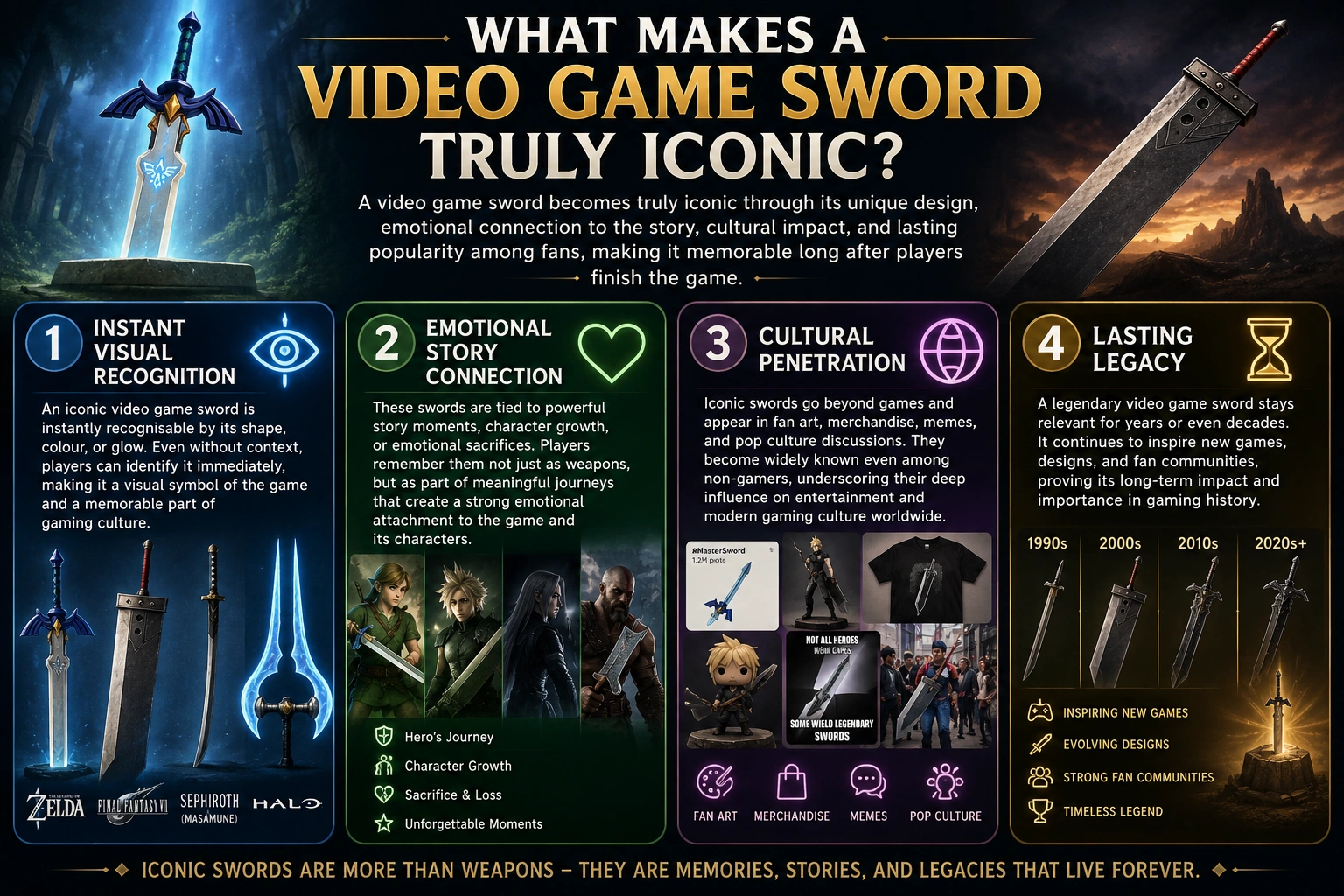
A video game sword becomes truly iconic through its unique design, emotional connection to the story, cultural impact, and lasting popularity among fans, making it memorable long after players finish the game.
1. Instant Visual Recognition:
An iconic video game sword is instantly recognisable by its shape, colour, or glow. Even without context, players can identify it immediately, making it a visual symbol of the game and a memorable part of gaming culture.
2. Emotional Story Connection:
These swords are tied to powerful story moments, character growth, or emotional sacrifices. Players remember them not just as weapons, but as part of meaningful journeys that create a strong emotional attachment to the game and its characters.
3. Cultural Penetration:
Iconic swords go beyond games and appear in fan art, merchandise, memes, and pop culture discussions. They become widely known even among non-gamers, underscoring their deep influence on entertainment and modern gaming culture worldwide.
4. Lasting Legacy:
A legendary video game sword stays relevant for years or even decades. It continues to inspire new games, designs, and fan communities, proving its long-term impact and importance in gaming history.
What is the Ranking Criteria for Iconic Video Game Swords?

Iconic video game swords are ranked by visual design, story importance, fan popularity, cultural influence, and demand for replicas among gamers.
1. Visual Design:
An iconic sword must have a unique, instantly recognisable appearance. Shape, colour, glow, size, and style all matter because a strong visual identity helps players remember the weapon. The best video game swords become symbols of their franchises and remain recognizable even to people who have never played the games.
2. Story Significance:
A legendary video game sword should play an important role in the story. Many iconic swords are tied to emotional moments, hero journeys, sacrifices, or major battles. Their connection to characters and storytelling gives them meaning beyond combat and helps players build strong emotional attachments to them over time.
3. US Fan Recognition:
To rank highly, a sword must be widely recognised by American gamers across generations of gaming. Popularity in the US gaming community matters because these weapons become part of gaming culture through discussions, conventions, online videos, fan art, and social media recognition among millions of players nationwide.
4. Cultural Impact:
The most iconic swords influence gaming culture far beyond their original games. They appear in merchandise, cosplay, memes, collectibles, and entertainment discussions worldwide. A sword with a strong cultural impact becomes part of mainstream pop culture and continues inspiring future games, weapon designs, and fan communities for many years.
5. Replica Demand:
Replica popularity is a major sign of a sword’s iconic status. Fans often want real-life versions of famous gaming swords for collections, cosplay, or decoration. Swords with high replica demand show lasting fan passion and strong emotional connection, especially in the large American gaming merchandise and collector market.
Top 10 Most Iconic Video Game Swords of All Time:
The top 10 Most Iconic Video Game Swords include famous blades like the Master Sword and the Buster Sword, judged by design, wielder, story impact, US fan popularity, cultural influence, and lasting legacy.
10. Frostmourne — World of Warcraft:
Wielder: Arthas Menethil, later known as the Lich King. Frostmourne is one of the most lore-rich swords in gaming, famously tied to the chilling line “Frostmourne hungers.” It is a corrupting runeblade that transformed a noble paladin into one of gaming’s most tragic villains. Its massive, icy-blue glow and haunting silhouette make it instantly recognisable. In the US, World of Warcraft shaped online gaming culture, and Arthas’ downfall remains deeply emotional for MMO fans. It ranks 10 because, while legendary, its impact is strongest within the Warcraft community rather than all gamers.
9. Soul Edge — Soul Calibur Series:
Wielder: Nightmare, with various users across the series. Soul Edge is iconic as a living, evil sword with its own consciousness that corrupts anyone who wields it. Its twisted, organic design makes it stand out as one of gaming’s most unsettling weapons. The entire Soul Calibur universe is built around its conflict with Soul Calibur. In the US, it is well recognised within the fighting game community. It ranks 9 because it is legendary in its genre but has less mainstream recognition than higher-ranked swords.
8. Silver Sword — The Witcher Series:
Wielder: Geralt of Rivia. The Silver Sword is iconic because it represents the Witcher’s unique dual-sword system: steel for humans and silver for monsters. It carries deep cultural weight and is as recognisable as Geralt himself. Rooted in Eastern European folklore, it adds authenticity unmatched by many game weapons. In the US, The Witcher gained massive popularity after the Netflix series, making Geralt’s silver sword widely known even among non-gamers. It ranks 8 due to strong mainstream recognition, though it shares attention with his steel blade.
7. Rebellion — Devil May Cry Series
Wielder: Dante. Rebellion is the defining sword of the Devil May Cry franchise, embodying its stylish, over-the-top action. Its bold design, with a massive blade, red handle, and skull motif, perfectly matches Dante’s rebellious personality. Over multiple games and an anime adaptation, it becomes inseparable from him. In Devil May Cry 5, its emotional link to Dante’s family history adds deeper meaning. In the US, the series has a strong action game fanbase, with Dante a popular cosplay choice at major conventions. It ranks 7 due to strong genre fame but limited casual recognition.
6. Blades of Chaos — God of War Series
Wielder: Kratos. The Blades of Chaos are the original symbol of Kratos’ rage and the weapon most closely tied to his identity across the God of War franchise. Their chained design is instantly recognizable and unlike any other weapon in gaming. They carry heavy emotional meaning, as they were forced upon Kratos by Ares as punishment and later became a burden he could never fully escape. Their return in God of War (2018) is one of the most celebrated moments in modern gaming. In the US, the series is hugely beloved on PlayStation, and this moment holds deep emotional impact. It ranks 6 for its powerful legacy and nostalgia.
5. Leviathan Axe — God of War Series
Wielder: Kratos. The Leviathan Axe redefined how a video game weapon could feel, especially with its iconic recall mechanic that became a landmark gameplay feature. Its icy blue runes on dark steel give it a powerful and instantly recognizable look. Emotionally, it was crafted by the same dwarves who made Mjolnir and was gifted to Kratos by his wife Faye, symbolising his new beginning. In the US, God of War (2018) is highly celebrated for its mature storytelling and action. It ranks 5 as a modern icon, though attention is split between multiple legendary weapons in the series.
4. Energy Sword — Halo Series
Wielder: Covenant Elites, and famously players in multiplayer matches. The Energy Sword is iconic for introducing intense melee combat into a shooter genre dominated by guns, reshaping how US gamers viewed sci-fi weapons. Its twin plasma blades create a futuristic design unlike anything in real life. In multiplayer, the activation sound and sudden close-range kills became a shared memory for millions of American players. Halo defined Xbox online gaming culture in the US, especially during Halo 2 and Halo 3. It ranks 4 due to massive nostalgia and its instantly recognizable sci-fi identity.
3. Buster Sword — Final Fantasy VII
Wielder: Cloud Strife, originally belonging to Zack Fair. The Buster Sword is iconic because it proved a video game weapon could be physically impossible yet emotionally powerful at the same time. Its massive, physics-defying size—carried effortlessly by Cloud—became a bold visual statement. It also carries deep emotional weight as Zack’s former sword, symbolizing inherited grief and identity. In the US, Final Fantasy VII is one of the most influential RPGs ever, and the Buster Sword became one of the first gaming weapons fans wanted to own in real life. It ranks 3 for near-universal recognition and legacy.
2. Masamune — Final Fantasy VII
Wielder: Sephiroth. Masamune is iconic as one of the longest swords in gaming history, wielded by arguably the most legendary video game villain ever created. Its extreme length and elegant design make it visually unforgettable, often extending beyond the screen in cinematic scenes, creating a striking effect no other sword has matched. Named after the famous Japanese swordsmith Masamune, it carries real-world cultural significance. In the US, Sephiroth is consistently ranked among the top video game villains, and his appearance in Super Smash Bros. Ultimate sparked major excitement. It ranks 2 for unmatched villain association and visual impact.
1. Master Sword — The Legend of Zelda Series
Wielder: Link. The Master Sword ranks as the most universally recognized video game sword in US gaming history, even identifiable by many non-gamers. With a 35-year legacy across numerous Zelda titles, it has maintained unmatched cultural relevance in America. Its core concept—a blade that chooses its worthy hero—fits the American “chosen one” narrative. Continued Zelda releases keep it relevant in 2026. The series is Nintendo’s most beloved in the US, and the Master Sword appears widely in merchandise, tattoos, and pop culture. Its defining moment is the Pedestal of Time scene in Ocarina of Time, a landmark in US gaming history.
Honourable Mentions – Swords That Nearly Made the List:
Several iconic weapons just missed the top 10, including Blade of Olympus, Geralt’s Steel Sword, Dante’s Sparda, Minecraft Diamond Sword, and Keyblade, all highly memorable but less universally recognized in US gaming culture.
1. Blade of Olympus — God of War
Used for human enemies, it represents the Witcher’s dual-sword fighting system. While essential in gameplay, it is overshadowed by the Silver Sword in US pop culture recognition and mainstream discussions, especially after the Netflix series boosted The Witcher’s popularity.
2. Geralt’s Steel Sword — The Witcher
Used for human enemies, it represents the Witcher’s dual-sword fighting system. While essential in gameplay, it is overshadowed by the Silver Sword in US pop culture recognition and mainstream discussions, especially after the Netflix series boosted The Witcher’s popularity.
3. Dante’s Sparda — Devil May Cry
A legendary demon sword tied to Dante’s heritage and immense demonic power. It carries deep lore importance, but is less visually and culturally recognized than Rebellion, which remains the franchise’s defining weapon among US action-game fans.
4. Minecraft Diamond Sword
A simple pixel-based weapon that became instantly recognisable worldwide. It represents creativity, survival, and crafting culture in gaming, but lacks the emotional storytelling depth and narrative significance found in higher-ranked iconic video game swords.
5. Keyblade — Kingdom Hearts
A magical sword-key hybrid central to Sora’s journey across multiple worlds. It is highly iconic in crossover gaming culture, but its complex storyline and niche narrative structure limit broader mainstream US recognition compared to more universally known weapons.
Sword-based games resonate strongly with American gaming culture because the idea of a hero wielding a legendary blade is deeply rooted in US storytelling, from folklore to Hollywood films. This “chosen one” archetype imbues swords with meaning and symbolism. US gamers often value character-driven weapon design over pure mechanics, which is why iconic blades stand out so much. American cosplay culture, the largest in the world, regularly features sword-wielding characters at events like San Diego Comic-Con and PAX. The US also leads the global market for gaming replicas, where swords are highly popular. Gaming media and YouTube have kept these iconic weapons relevant for decades. For collectors, visit SwordsKingdom
What is the Most Iconic Video Game Sword of All Time?
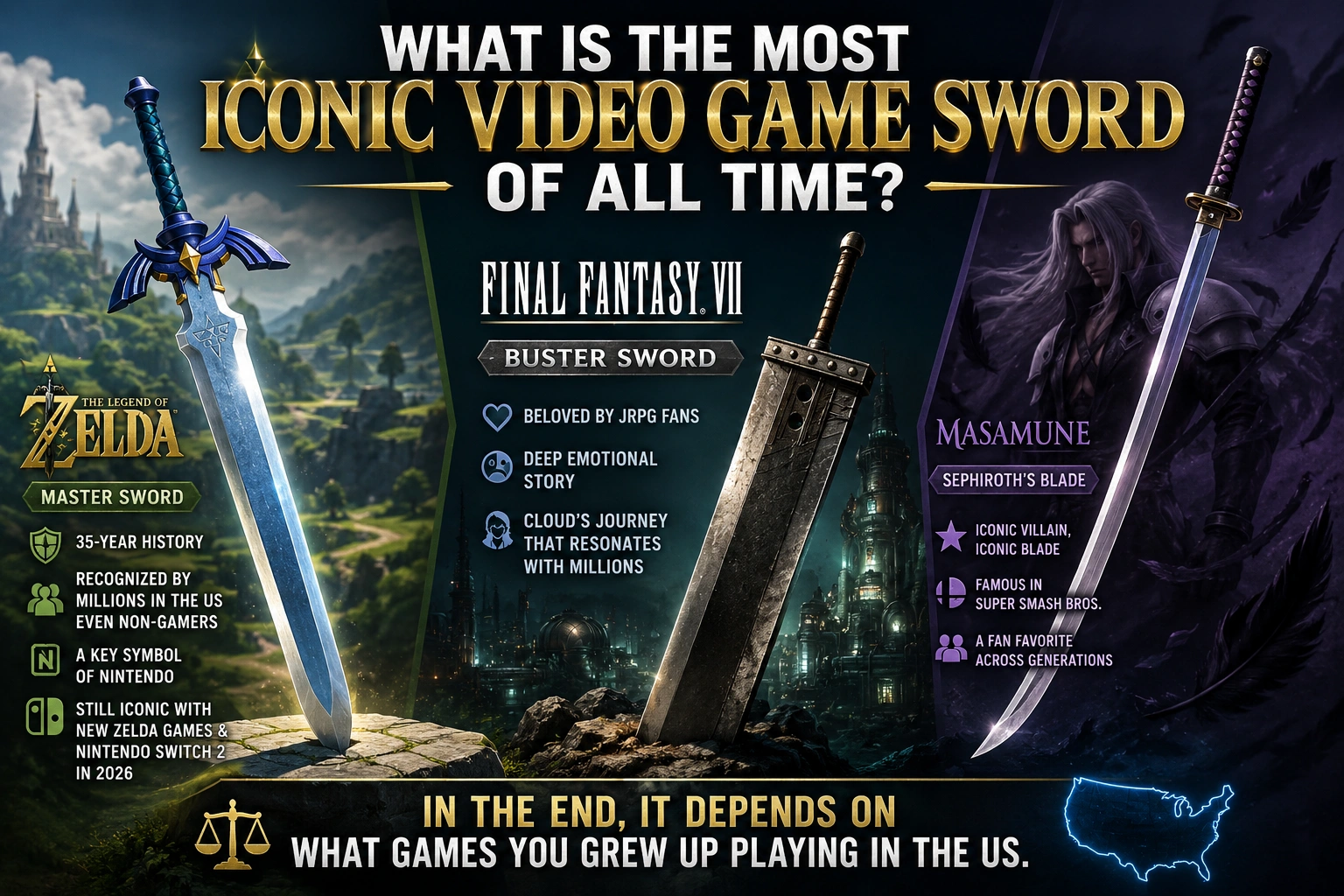
The most iconic video game sword of all time is the Master Sword from The Legend of Zelda. It has a 35-year history and is easily recognized by many people in the US, even those who do not play video games. It is a key symbol of Nintendo and remains popular today with new Zelda games and the Nintendo Switch 2 in 2026.
However, some gamers have different opinions. Fans of JRPGs often choose the Buster Sword from Final Fantasy VII because of its emotional story. Others prefer Masamune, known for Sephiroth and its fame in Super Smash Bros. In the end, the answer depends on what games you grew up playing in the US.
Which Era of Gaming Produced the Most Iconic Sword Designs?
Gaming swords evolved across different eras, with each generation adding new styles, stories, and emotional meaning. From simple fantasy blades to modern cinematic weapons, every era shaped how US gamers view iconic swords today.
1990s:
This era built the foundation of iconic sword design in the US. Games like The Legend of Zelda, Final Fantasy VII, and Sephiroth’s Masamune introduced the Master Sword, Buster Sword, and Masamune. These swords became legendary for their strong characters, simple yet powerful designs, and unforgettable early gaming stories that defined a generation of American players.
2000s:
The 2000s expanded sword design into new genres for US gamers. Weapons like the Energy Sword from Halo, Rebellion from Devil May Cry, and Frostmourne from World of Warcraft added sci-fi, action, and MMO depth. This era made swords more diverse, more cinematic, and more closely connected to American multiplayer and online gaming culture.
2010s:
This era made swords feel more emotionally deep for US gamers. The Leviathan Axe and Blades of Chaos return in God of War, showing mature storytelling, while the Witcher’s Silver Sword added realism and a fantasy blend. These weapons were no longer just tools—they became emotional symbols, representing character growth and powerful storytelling in modern American gaming.
2020s:
The 2020s focus on historical realism and cinematic sword combat. Games like Assassin’s Creed: Shadows and Ghost of Yotei bring authentic swordplay into modern US gaming culture. This era highlights precision, history, and realism, showing how sword design continues to evolve while staying deeply connected to immersive storytelling and player experience.
Conclusion:
Video game swords are more than weapons—they are symbols of adventure, emotion, and gaming history. From the Master Sword and Buster Sword to Masamune and the Energy Sword, these legendary blades shaped how American gamers connect with stories and characters. Their designs, emotional resonance, and cultural impact made them unforgettable icons across multiple generations of gaming. Many US players grew up alongside these swords, creating strong personal memories tied to famous gaming moments. Even today, these weapons remain popular through cosplay, collectibles, and replica culture. As gaming evolves, iconic swords continue to inspire players and remain timeless symbols of the video game world.